Web cookies (also called HTTP cookies, browser cookies, or simply cookies) are small pieces of data that websites store on your device (computer, phone, etc.) through your web browser. They are used to remember information about you and your interactions with the site.
Purpose of Cookies:
Session Management:
Keeping you logged in
Remembering items in a shopping cart
Saving language or theme preferences
Personalization:
Tailoring content or ads based on your previous activity
Tracking & Analytics:
Monitoring browsing behavior for analytics or marketing purposes
Types of Cookies:
Session Cookies:
Temporary; deleted when you close your browser
Used for things like keeping you logged in during a single session
Persistent Cookies:
Stored on your device until they expire or are manually deleted
Used for remembering login credentials, settings, etc.
First-Party Cookies:
Set by the website you're visiting directly
Third-Party Cookies:
Set by other domains (usually advertisers) embedded in the website
Commonly used for tracking across multiple sites
Authentication cookies are a special type of web cookie used to identify and verify a user after they log in to a website or web application.
What They Do:
Once you log in to a site, the server creates an authentication cookie and sends it to your browser. This cookie:
Proves to the website that you're logged in
Prevents you from having to log in again on every page you visit
Can persist across sessions if you select "Remember me"
What's Inside an Authentication Cookie?
Typically, it contains:
A unique session ID (not your actual password)
Optional metadata (e.g., expiration time, security flags)
Analytics cookies are cookies used to collect data about how visitors interact with a website. Their primary purpose is to help website owners understand and improve user experience by analyzing things like:
How users navigate the site
Which pages are most/least visited
How long users stay on each page
What device, browser, or location the user is from
What They Track:
Some examples of data analytics cookies may collect:
Page views and time spent on pages
Click paths (how users move from page to page)
Bounce rate (users who leave without interacting)
User demographics (location, language, device)
Referring websites (how users arrived at the site)
Here’s how you can disable cookies in common browsers:
1. Google Chrome
Open Chrome and click the three vertical dots in the top-right corner.
Go to Settings > Privacy and security > Cookies and other site data.
Choose your preferred option:
Block all cookies (not recommended, can break most websites).
Block third-party cookies (can block ads and tracking cookies).
2. Mozilla Firefox
Open Firefox and click the three horizontal lines in the top-right corner.
Go to Settings > Privacy & Security.
Under the Enhanced Tracking Protection section, choose Strict to block most cookies or Custom to manually choose which cookies to block.
3. Safari
Open Safari and click Safari in the top-left corner of the screen.
Go to Preferences > Privacy.
Check Block all cookies to stop all cookies, or select options to block third-party cookies.
4. Microsoft Edge
Open Edge and click the three horizontal dots in the top-right corner.
Go to Settings > Privacy, search, and services > Cookies and site permissions.
Select your cookie settings from there, including blocking all cookies or blocking third-party cookies.
5. On Mobile (iOS/Android)
For Safari on iOS: Go to Settings > Safari > Privacy & Security > Block All Cookies.
For Chrome on Android: Open the app, tap the three dots, go to Settings > Privacy and security > Cookies.
Be Aware:
Disabling cookies can make your online experience more difficult. Some websites may not load properly, or you may be logged out frequently. Also, certain features may not work as expected.
DMD undergrad, Jamison Cote, was recognized by NBC Connecticut for creating an online platform where students can send and receive personalized encouraging videos during these tough times. Along with his classmate, Alex Kim, the two students set out to help their peers cope with the stressors of college life during a pandemic by creating a new platform called Refreshr.
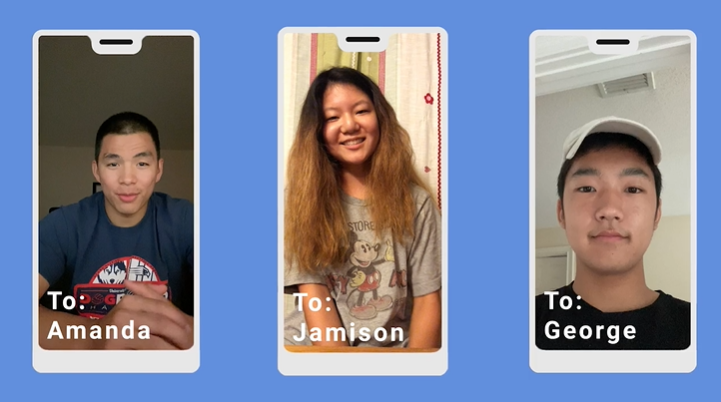
Refreshr invites college students to fill out a form with basic information such as what school they attend and a fun fact about themselves. Once the form is filled out, Kim and Cote randomly match the student with another student. Each student records and receives a short video of encouragement. It works similarly to getting a pen pal.
Student-Launched Platform Supporting Mental Well-Being with Positive Messages from Peers
Two UConn students have launched a social app they hope will make college students around the country feel more connected and supported.
The Refreshr platform allows students to connect and share supportive video greetings (via Refreshr.org).
Pandemic life for college students is overwhelming, challenging, and isolating.
Two UConn students, though, wanted to help their peers build supportive connections during this time of uncertainty and physical distancing, and they’re doing so with the creation of an online platform,Refreshr.
“With mental health, it’s sometimes hard for students to support each other,” says Alex Kim ’22 (BUS), who co-founded Refreshr with friend, Jamison Cote ’22 (SFA). “Last semester was definitely just weird, and unprecedented, and crazy. Entering this semester and the coming semesters, it’s still going to be different – it’s a new way, how we learn and how we interact with other people. With such a drastic change, we still need to be able to be resilient as students and to be able to support each other, because we’re going to need it the most, especially during a time like this.”
Like pen-pals for the Internet age, Refreshr works to match students with each other and then helps them to record a video message specifically for their partner and use Refreshr’s one-way video sharing platform to send their words of encouragement. While most of the platform’s current participants are also UConn students, their goal, Kim says, is to connect a diverse group of students from institutions across the country that can form lasting connections.
“We wanted to make this a platform where students can send videos with uplifting messages of support and positivity to other college students,” says Kim, “to hear from students like you who are going through the same struggles of being in college during coronavirus. With Refreshr, we’re trying to build a community of students supporting each other.”
The idea for Refreshr, says Kim, came while he and Cote were enrolled in “The Entrepreneurial Journey,” a course taught by David Noble, associate professor anddirector of the Peter J. Werth Institute for Entrepreneurship and Innovation, and was modeled after their mentor, Noah Friedman, and his similar6FTCloser project. The platform launched in early September, and Kim says they hope their focus on college students will help promote well-being amongst their peers.
“Everyone needs to take care of their mental well-being because these struggles can happen to really, really anyone,” he says. “I think coronavirus has really showed the impact of being isolated from other people and just the difficulty of the circumstances that are now placed upon us as students.”
Kim says thatlearning about entrepreneurship at UConn, and seeing the work of fellow students who are starting businesses or developing new innovations, inspired him to take this initiative and to try to make meaningful change. He says that other students with an idea shouldn’t be afraid to take a chance and try to make something of it.
He also said that he hopes fellow students who are experiencing difficulties during the pandemic will seek out help, connection, and community – and know that they’re not alone.
“There’s lots of students who can resonate with the fact that it’s going to be a difficult semester,” Kim says, “so I hope there’s some at peace with that, and just hope you get the support and encouragement that you need.”
Congratulations to the DMD faculty who have received UConn OVPR SCHARP awards!
Professor Heejoo Kim (PI) was awarded $8,000 for “The Loom,” a collaboration with Co-PI’s Helene Kvale (Dramatics Arts), Tanju Ozdemir (DMD), and Simon Hutchinson (Univ. of New Haven).
DMD professors, Tom Scheinfeldt and Greg Colati are Co-PI’s on a $50,000 Breakthrough Award with Mark Healey (PI) (History) and Greenhouse Studios Colleagues for, “Bibliohack Plus: an integrated, low cost, open source digitization tool kit and workflow for the global south and underserved areas.”
We are really proud that two of the five university-wide awards involved DMD faculty research! SCHARP awards aim to support innovative works of scholarship and creative activities in the arts and humanities that have the potential to transform a field of study, impact the common good, or chart a new direction in scholarly, creative, or artistic development.